Understanding the sky above
Boats of note
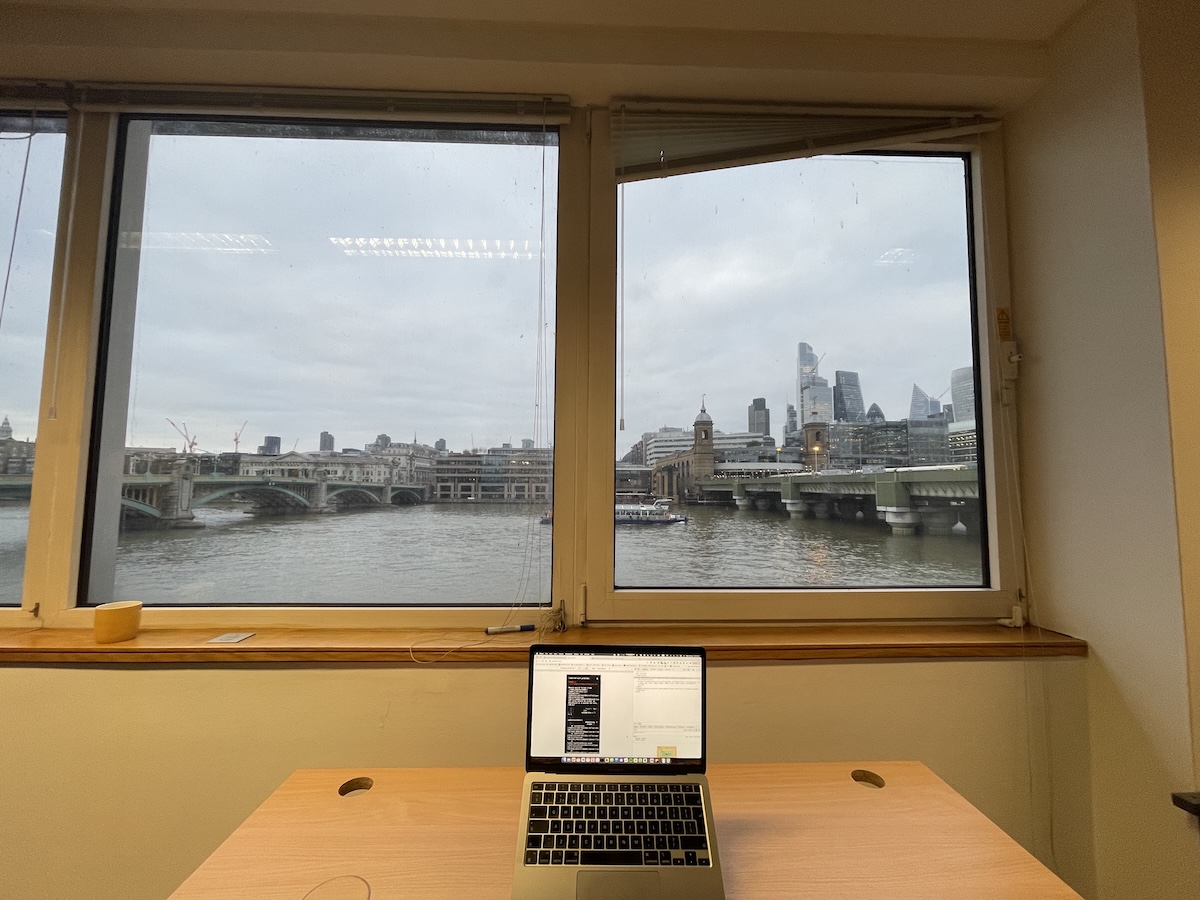
Many years ago I was lucky enough to work in an office overlooking Southwark bridge. Every day the same vessels would pass by: the Uber boat, the bright yellow containers taking Wandsworth's rubbish East, the Thames Rib Experience blasting the James Bond theme tune to stag parties. Much like aircraft, vessels over a certain size emit a data signal called AIS (Automatic Identification System) that broadcasts datapoints like latitude and longitude as well as a vessel identifier.
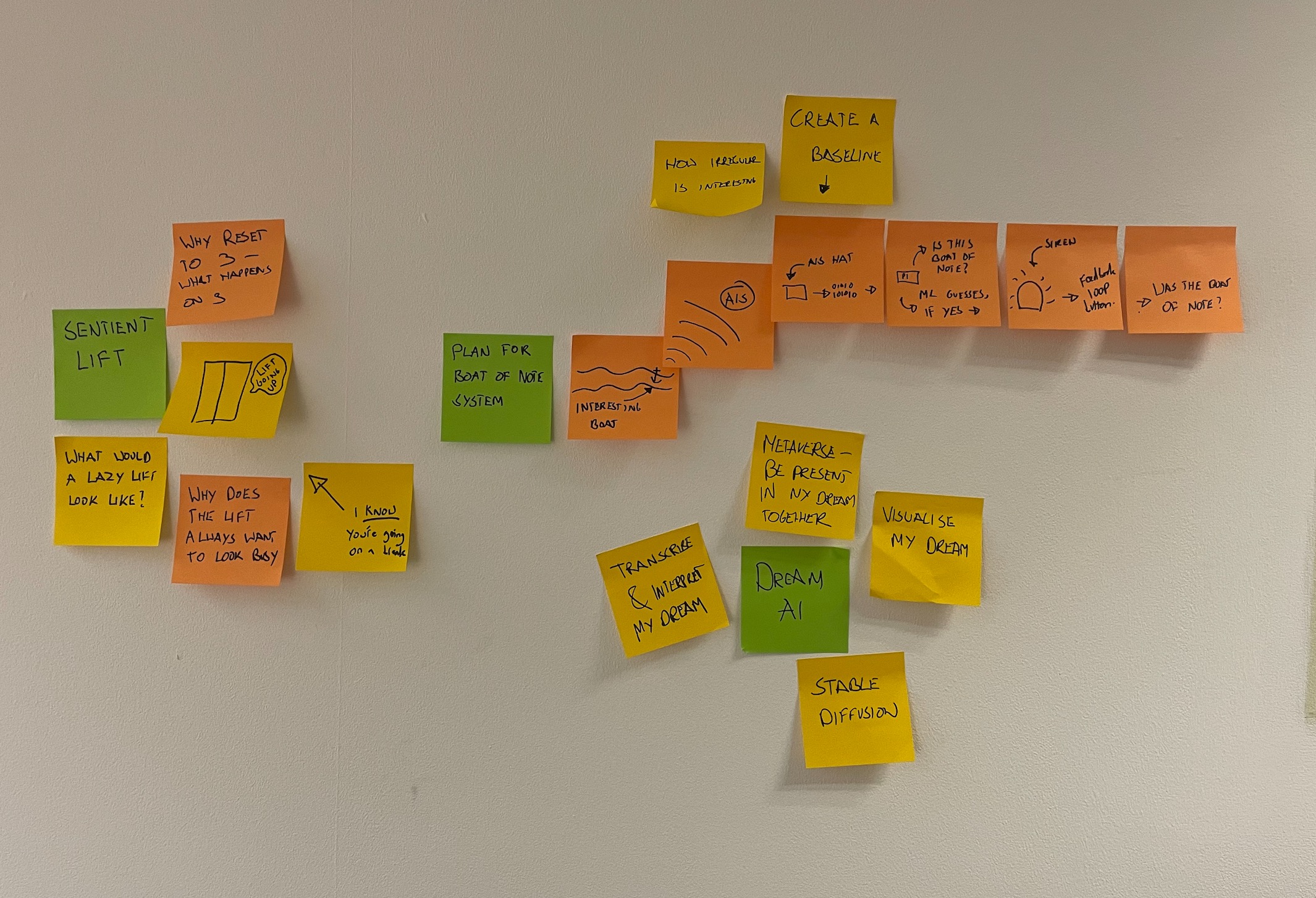
My desire was to create a system that would use AIS to notify me when there was a vessel that was... interesting. A vessel that would make me wonder where it had come from and why it was there. It would let the millions of identical Uber Boats pass by, only piping up when a lifeboat, tanker or unusual pleasure-craft appeared. Or in other words, when there was a boat of note.
This desire was never fulfilled. Partly for data quality reasons (AIS latency is notoriously poor) and partly because the building got knocked down before I could investigate further.
The King's helicopter
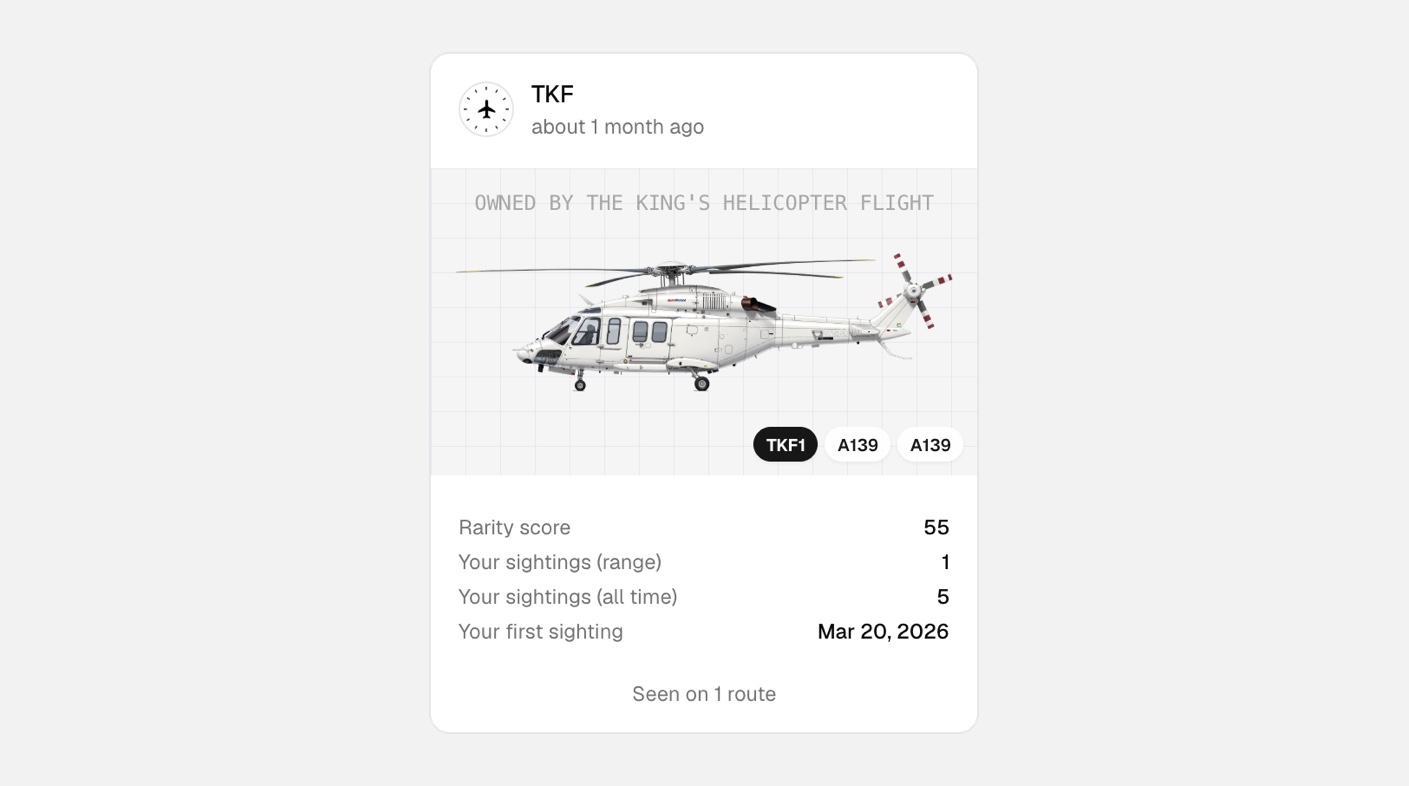
A few months ago as I was puzzling over a feature request for JetClock I noticed something unusual. The helicopter flying past appeared to be owned by "The King". I looked up, saw a glint in the sky; and then it was gone. Replaced by the ten-times-daily London to Munich A320. I checked FlightRadar24 and got that familiar "N/A - N/A" origin and destination.
Suddenly it struck me: this was boats of note, but in the sky. In the same way that the Uber boats obfuscated the truly interesting river traffic, might all the scheduled commercial flights above me be hiding the truly interesting and important stories that are being written in the sky? Wouldn't it be amazing to be able to see past the noise and be alerted when a truly interesting aircraft was flying by? Surely it couldn't be too difficult to figure it out.
How naive I was.
Like many things, a seemingly simple question quickly unravelled into something profoundly complex.
When does an aircraft become interesting?
I'm not a mathematician or an economist. But if I was, I might argue that the question: "is this object interesting?" could be most accurately answered with some kind of algorithm. Something "interesting" is by definition something that deviates from the typical patterns of normality: it's a different colour, it's new, it has an unusual provenance.
The plan, therefore, was simple. Baseline the air traffic patterns above me: have I seen this aircraft before? Is it flying at typical altitude? Is it owned by a "normal" company? This data, in aggregate, would then theoretically allow me to know, at the end of the day, what - if anything - of interest had happened in the sky above.
The data problem
So I set to work. JetClock already notifies you whenever a plane flies overhead, so I thought it would be a simple task. Store a small amount of metadata about the aircraft and move on. Quite quickly, though, I hit a roadblock. The most interesting aircraft are often deliberately obfuscated, as the King's Helicopter was. I've never understood the N/A abbreviation; as if some flights are without an origin and destination. They surely have to start and finish somewhere. What goes up must come down.
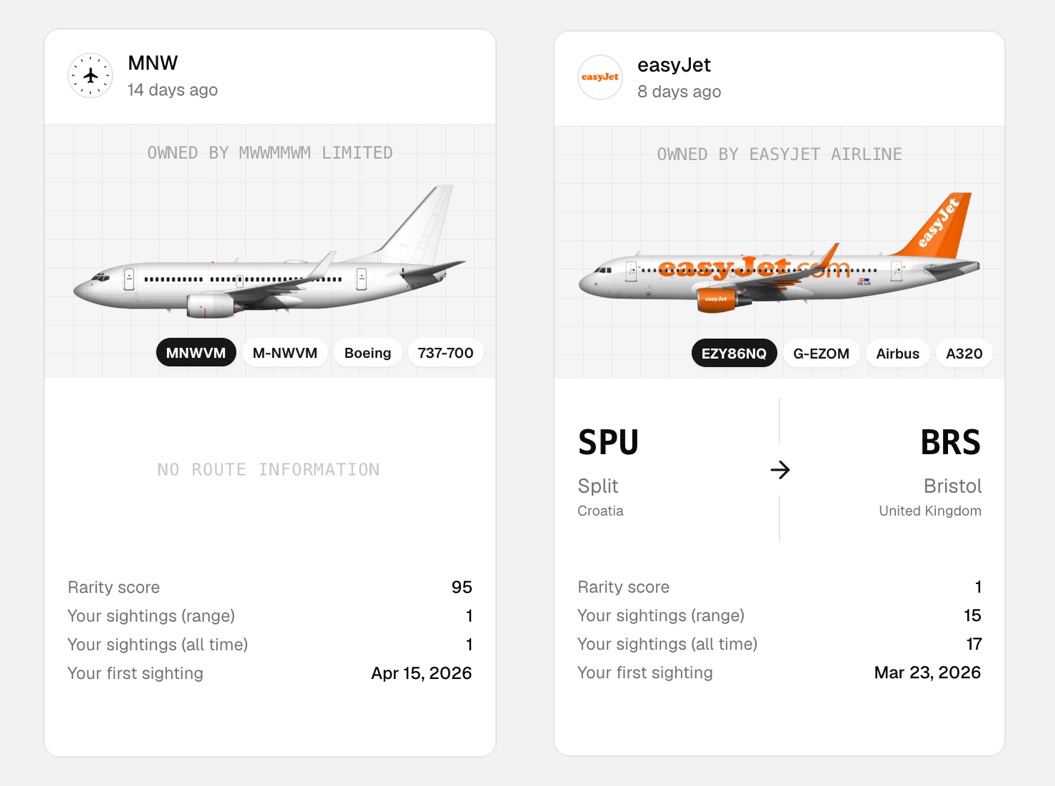
There are various reasons for the elusive N/A. Some are official programmes like LADD in the US that allows private jets to opt out of filing publicly available flight plans. Some are military aircraft that obfuscate their flight plan deliberately. And some are just aircraft that are confused or indecisive (indefinitely circling helicopters spring to mind). Thus began the fall down the flight data rabbit hole. I began to collate aircraft ownership datasets, predictive flight plans for unidentified aircraft and started to use the "number of times seen" as a proxy for the rarity and thus interesting-ness of an aircraft.
Some routes are still obfuscated and display the dreaded "no route information" message, but for the majority of unusual aircraft there are now origins at least. And I've got a plan to get destinations too in the very near future.
After a few months I began to build up a picture of typical flight traffic. The critical baseline. And then I began to see it. The Emirati 747 flying in for negotiations with the UK government. The dozen upon dozens of repositioning flights due to the situation in the Gulf. And I saw Lord Ashcroft, the famous pollster (and.. author?), jetting back from his holiday in the Canary Islands.
From my vantage point at about 3m altitude these all just looked like specs in the sky. But the baseline data allowed me to know instantly whether there was a deviation, some deeper meaning, some unusual story, being told in the sky above me.
Am I a planespotter?
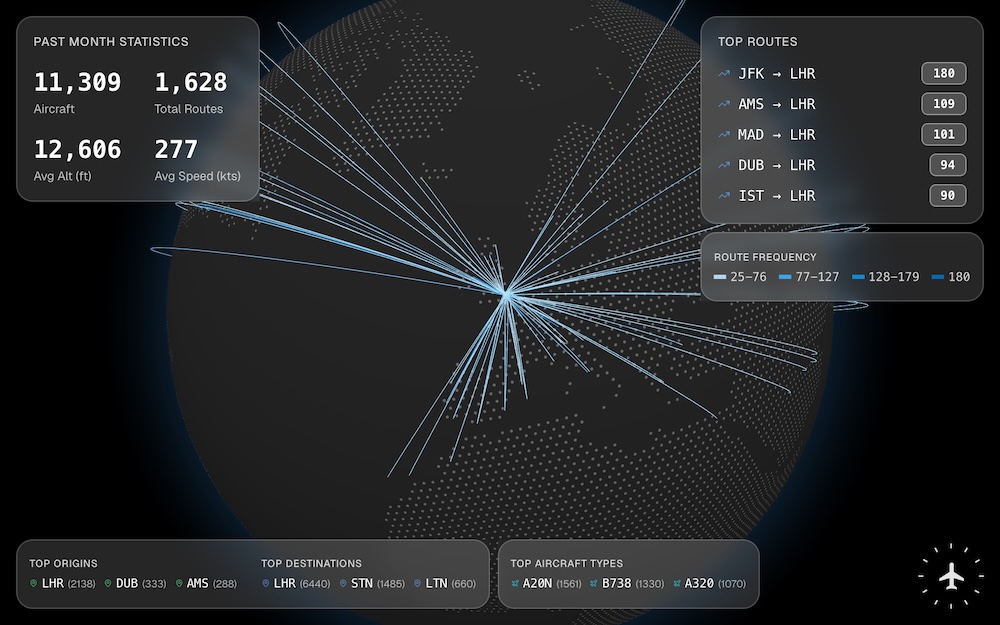
The last year has required me to reassess my identity. I never considered myself to be a planespotter. I don't care deeply about unusual liveries or ticking off every Airbus variant. But I think I do believe that what happens in the sky can tell us about ourselves, about the world, and about humanity as a whole. Almost a year ago I wrote that "Planes are a visible emblem of the awesome achievement of the human race (and of our ultimate destruction too)." And whilst this is still true - I've come to realise that it is much more complex than this.
What happens in the sky is a direct reflection of what is happening on earth. And not just the narrow square of earth where we live out our lives. Of the whole earth. These pieces of metal, from thousands of miles away, fuelled by the remains of dinosaurs, are a mirror in the sky. About conflict, inequality, migration, dreams of the future, destruction and creation.
So, on reflection, I think I have become a planespotter. And I'd encourage you to become one too.
If you have a JetClock you'll now also have your own baseline of normal activity available via app.jetclock.io. Or if you don't have one, you can get a JetClock at jetclock.io.